


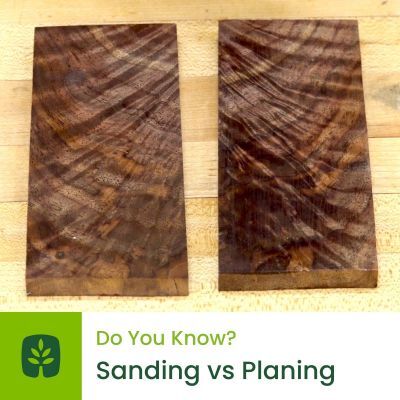

Sanding vs Planing – Do You Know The Difference? Somerset Timber’s Ian Burger explains it from his passionate “woodworker” point of view.
Being an avid woodworker, Ian has often wondered about the real difference between sanding and planing and the necessity of both where finishing and preparing timber is involved. “I have found on numerous occasions that sanding a piece of timber after having it planed results in a duller appearance and lower absorption capabilities for both adhesive and oils. The reason for this lies at both the microscopic and molecular level,” he said.
Microscopic Scratches
In most instances, sanding results in a higher frequency of microscopic scratches, which diffuse more light giving the wood a duller appearance. Planing, on the other hand, leaves fewer clean-cut scratches, diffusing less light resulting in wood with a higher shine and a more detailed appearance.
Molecular Level
Sanding results in a more closed cell structure to the wood fibres which affects the efficiency of both adhesive and oil absorption. Planed surfaces provide a cleaner and more open cell structure which means enhanced penetration capabilities, critical to any carpenter or commercial timber manufacturer.
When To Sand and When To Plane?
It is fair to say, both sanding and planing have their place BUT knowing the end goal and prepping your material in advance is critical in ensuring the right method is used for the right reasons and the correct applications.
Sanding is especially handy when doing turned objects like table legs as the chisel used for turning the legs will rarely provide a smooth enough finish. Planing is more suited in the laminated beam manufacturing sector for preparing individual lamellas before gluing them together to form a beam,” concludes Ian.
If you have any further questions about Sanding vs Planing or timber in general, please reach out to the Somerset Timbers team:
📧 sales@somtim.co.za
📍 257 Broadlands Road, Strand, 7140 South Africa


 Comalytics