


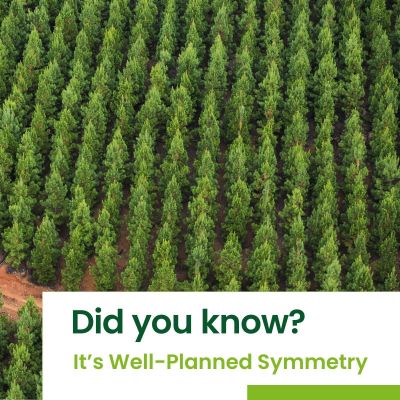

For those who love symmetry, there is a calming beauty about the structure of timber plantations. But the straight rows, even spaces and equal height are nothing to do with maintaining symmetry. Rather, it is about ensuring optimal nutrition and growth.
In a 2-part piece that forms part of the Somerset Timber Did You Know series, Ian Burger explains the basics of planting pine in South Africa.
It starts with spacing and time. Approximately 136 seedlings are planted per hectare, with a spacing of 2.4 to 3.0m between each. These young pines are left to grow for between 4-8 years before the first thinning begins.
Thinning is the selective removal of trees in a stand, and is done many times during the lifecycle of each plantation. It is undertaken to improve the growth rate and health of the strongest trees which is also dependent on a balance between height and width.
During the first years, trees grow the most, as they fight for water, nutrients and sunlight. When the thinning begins, they start widening with their trunks expanding as more space becomes available. The thinnings allow for the faster-growing trees to remain behind and reach their optimum size. It also eliminates weak trees, increasing the overall health of the plantation and allowing for a continuous stream of income for the forestry landowner.
From the air, it’s nothing but a canopy. From the ground, it is an army of giants in balance, growing into the next generation’s source of wood. It’s all about the structure of timber plantations.


 Comalytics